
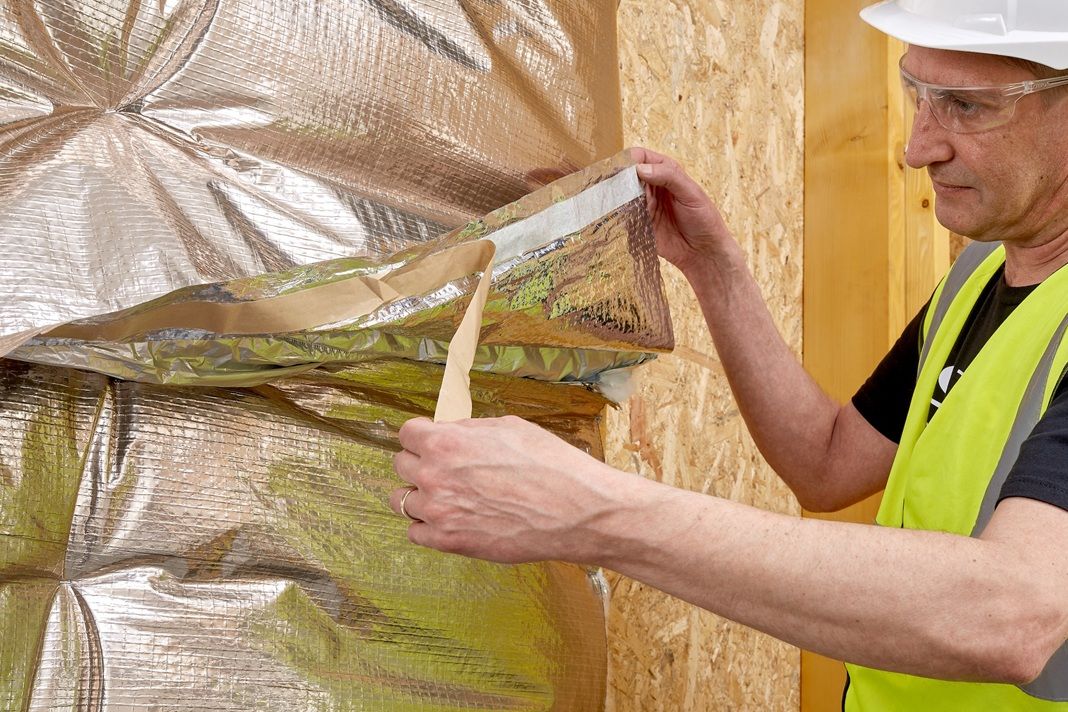
According to Actis, a Met Office extreme weather report has highlighted the importance of ensuring Britain’s homes can cope.
The report cited research that looked at how the fabric of a building can help in the battle to ensure occupants remain cool during hot weather. The research was carried out by Loughborough University’s Building Energy Research Group.
Dr Ben Roberts, Loughborough University’s senior lecturer in healthy buildings, wrote on academic news website The Conversation.
He said: “Combined with new regulations for overheating which limit the sun’s heat entering through windows, high levels of insulation and airtightness can be a positive thing for our buildings all year round.”
Harsha Mistry, architectural designer and technical manager at Actis insulation, said some forms of insulation can make homes unbearably hot during heatwaves. She added that others can keep them cool and can reflect around 94% of infrared radiation. Harsha highlighted some examples including Actis’ reflective insulation blankets, insulating vapour control layers and insulating breather membranes, including its two-in-one Eolis HC.
She added: “In the winter, insulation minimises the need for active heating by addressing thermal efficiency directly within the building’s structure, essentially a fabric-first approach. Similarly, during the summer, the reflective properties of Actis insulation deflect solar heat rather than transferring it indoors.
“This keeps the interior naturally cooler and significantly reduces the energy required for active cooling via air-conditioning.”
Met Office scientists reported that the climate of the 20th century is a thing of the past. They said that the hottest day of the year in the south of England now typically 4.5C warmer than it was between 1961 and 1990.
The report cited that 2025 was the warmest year since records began in 1884. It added that temperatures in the mid-forties could be reality for the UK by 2050 if global warming continues at its current pace.
Teams at Imperial College London, the Met Office and the London School of Hygiene and Tropical Medicine said more than 2,700 people may have died from heat-related causes in England and Wales during the May and June heatwaves.