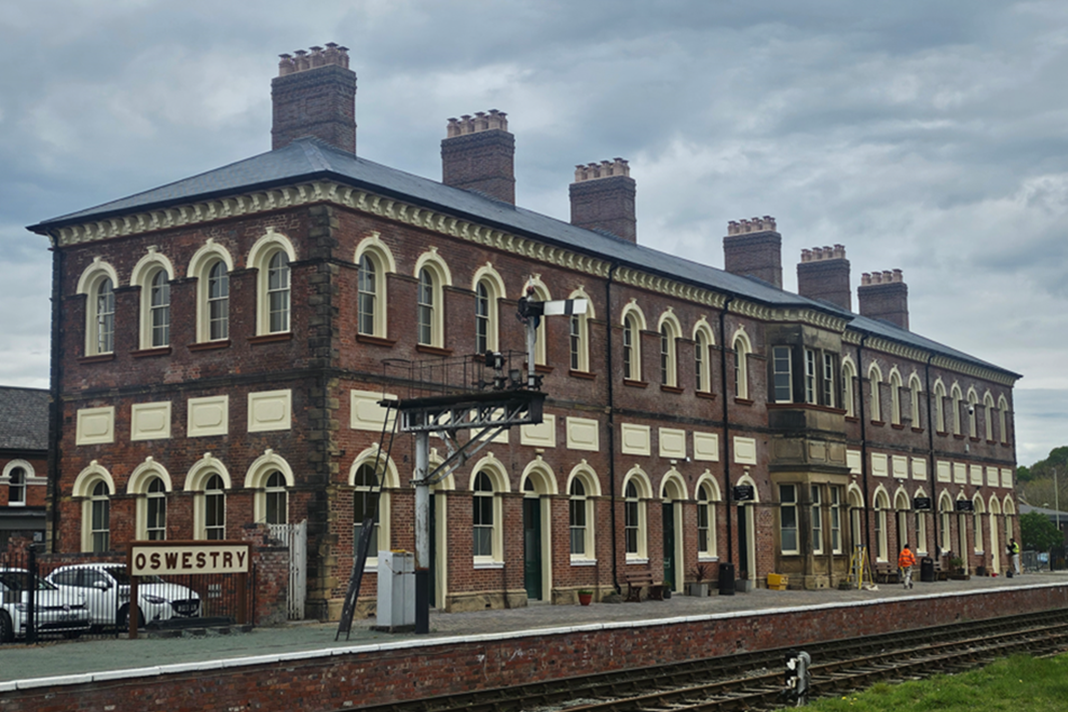
Approximately 16,000 of Welsh Slate’s 500mm x 300mm Ffestiniog Blue Grey Capital-grade slates have been installed on the roof of the Grade II listed Cambrian Railways Building in Oswestry.
According to a statement, it has been three years since the building has been properly visible as it was shrouded in scaffolding following storm damage in 2022 when a number of eaves corbels became loose. These are specifically referenced in the listing by Historic England and are a key feature of the building, it cited.
Funded by the UK Shared Prosperity Fund and owners Shropshire Council, this £630,000 phase of the renovation scheme was finished in nine months. The renovation was completed by local building conservation specialists Phillips and Curry in conjunction with consulting architectural technicians Donal Insall, Cambrian Heritage Railways, Oswestry Town Council and the Future Oswestry Group.
Work has included removing asbestos roof tiles and replacing them with 750m2 of the ones from Welsh Slate’s Ffestiniog quarry. The building’s exterior has also been restored to prevent falling masonry, as well as giving windows and doors a new coat of Cambrian Railway colours.
The scheme has also included the installation of nesting boxes for swifts under the eaves as well as bat roosting tiles along the roof which features six large chimneys and multiple hips and valleys. The Ffestiniog slates were graded into four thicknesses by Philips and Curry before they were laid and fixed with large-headed copper clouts.
Due to the tight site, Philips and Curry installed a haki scaffold stair to improve roof access for site operatives, along with a rack and pinion goods hoist to safely lift all materials to roof level.
Michael Curry, Philips and Curry director, said: “The roofing itself was straightforward. What was challenging was the long duration of time required in between stripping the roofs and then recovering them, which was approximately four months due to structural repairs to the roof structure and that all the new cast corbels needed to be fitted before the fascia boards could be fixed. It was a challenge keeping the building dry with temporary tarpaulins.
“The Ffestiniog slates were great to lay. We are immensely proud of our heritage roofers for completing this exacting work and two weeks ahead of programme.”